Die verborgenen Spielregeln des Universums:
Was ist Leben? Welche Spielregeln hat die Natur für unsere Welt und unser Leben vorgesehen? Und was hat das mit all den Krisen zu tun, die wir gerade erleben?
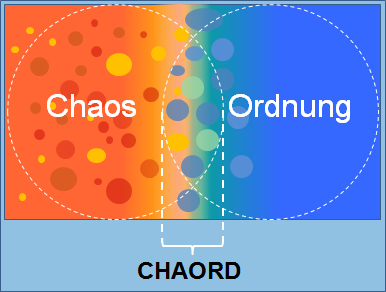
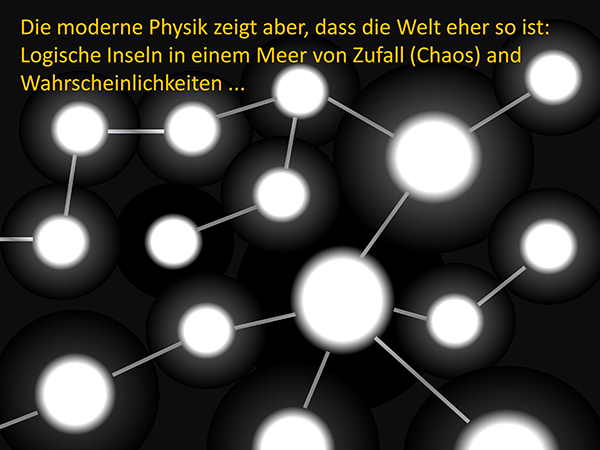
In seiner Suche stößt der Autor auf die vier Gesetze der Zeit, mit denen gleichzeitig ein grundlegender Dualismus offen in Erscheinung tritt. Es ist der Dualismus von Ordnung und Chaos, der in eine Welt führt, in der Logik und Beweisbarkeit in den Hintergrund treten. Es sind nun ganz andere, nämlich die Spielregeln der komplexen Systeme, um die die Physik gerne einen großen Bogen macht, die aber den Lauf und die Lebendigkeit der Welt und damit unser aller Leben bestimmen und prägen. Und erst, wenn wir endlich diese Spielregeln der Natur erkennen und akzeptieren, werden wir die Krisen und die Komplexität der modernen Welt verstehen und mit ihnen umgehen können.
Denn genau darum geht es jetzt: wenn wir unsere Art des Lebens erhalten wollen, müssen wir dringend herausfinden, wie die Welt wirklich funktioniert.
256 Seiten, ISBN 978-3755767220
BoD, Norderstedt, 2022
x
Einsteins Irrtümer: Die Entdeckung von Raum und Zeit.
420 Seiten, ISBN 978-3837092608
BoD, Norderstedt, 2010, 26,80 €
x
Physiconomics: Zur Physik der Ökonomie
256 Seiten, ISBN 978-3739217796
BoD, Norderstedt, 2015, 14,80 €
x
Die verborgenen Spielregeln des Universums. Band I: Woraus die Welt wirklich besteht.
216 Seiten, ISBN 978-3750470408
BoD, Norderstedt, 2020, 12,99 €
Anmerkungen zu diesem Buch
Nach der Veröffentlichung der 4. überarbeiteten Auflage von „Einsteins Irrtümer“ im Jahr 2010 bin ich oft gebeten worden, eine auch für Laien verständlichere Version zu schreiben. Angestoßen vom Inhalt und Erfolg des Buches „Physiconomics“ (2015), das sich für jeden verständlich mit den Krisen und Zukunftsaussichten unserer Ökonomie auseinandersetzt, kam aber noch etwas Anderes hinzu. Ich stand vor der Aufgabe, nicht nur „Einsteins Irrtümer“ und meine Kritik an der Speziellen Relativitätstheorie noch einmal zu überarbeiten, sondern vor allem die Physik und manch andere Teile der Naturwissenschaft in einen größeren Kontext zu stellen. Wie ich Ihnen in diesem Buch zeigen werde, ist dies dringend notwendig. Wir müssen schnellstens herausfinden, wie die Welt wirklich funktioniert.
Dafür beginne ich in diesem Band I mit der Frage, woraus denn unsere Welt überhaupt besteht. Denn selbst das ist bis heute nicht geklärt. Im Zentrum dieses populärwissenschaftlichen Buches steht daher der Weg zu der Entdeckung, dass die Welt offensichtlich nicht aus Raum und Zeit besteht, sondern aus dynamischer Wirkung. Es würde für die bekannte Physik ein völlig neues Fundament bedeuten. Ich nenne diesen Teil Matrix-Theorie.
Dr. Michael Harder, im Oktober 2020
x
Quantengravitation: Das Planck-Quantum als Ursprung der Allgemeinen Relativitätstheorie.
Zu den großen ungelösten Wissenslücken in unserem physikalischen Weltbild gehört die Frage nach der Vereinbarkeit von Einsteins Allgemeiner Relativitätstheorie (ART) und der Quantentheorie. Die derzeitige Suche nach den Antworten führt in der Physik zum etablierten Forschungsgebiet der Quantengravitation, wo allerdings verschiedene Lehrmeinungen miteinander konkurrieren.
Dieser Forschungsbericht beschreibt nun die Arbeitsweise und Erkenntnisse eines Wissenschaftlers, der frei von der universitären Denkdisziplin Befunde aus verschiedenen Wissensgebieten zusammenführt. Wie der Autor zeigt, geht die Suche nach einer Antwort weit über das eigentliche Thema hinaus. Denn der Weg zur Lösung führt unweigerlich über die großen Fragen der Zeit wie die bisher unbekannten Mechanismen der Zeitdilatation und die Dreiteilung der Zeit in Vergangenheit, Gegenwart und Zukunft.
In dem Bericht wird gezeigt, wie eine interdisziplinäre Kombination von längst vorhandenem Wissen dazu führt, dass das Modell eines Raumzeitkontinuums zugunsten eines gequantelten Skalarfeldes aus Wirkungsquanten aufzugeben ist. Das verblüffendste Ergebnis dieser neuen Theorie, die Matrixtheorie genannt wird, ist die Erkenntnis, dass das Planck´sche Wirkungsquantum nicht nur die Basis der Quantenphysik ist, sondern dass dieses Quantum gleichzeitig der Ursprung von Einsteins Allgemeiner Relativitätstheorie ist! Damit wird das Planck-Quantum zum Bindeglied von ART und Quantenphysik. Viele weitere Lösungsvorschläge zu fundamentalen Fragen der Physik wie die Frage nach der Natur des Higgs-Feldes und zur Urknalltheorie, welche die Matrixtheorie wie auf einen Schlag liefert, geben Anlass zur Hoffnung, dass hier möglicherweise etwas Grundlegendes gefunden wurde, das es weiter zu verfolgen gilt.
56 Seiten, ISBN 978-3769313642
BoD, Norderstedt, 2024, 8,99 €
x